
Winter Rat Control: Seeing More Rats This Year?
You’re not imagining it — quite a few people around Tamahere have mentioned seeing more rats and mice this autumn and winter.
Rodents often become more noticeable as temperatures drop and food becomes less abundant. They start moving closer to houses, sheds, compost bins, chicken coops, stock feed and warm roof spaces. The good news is that winter is also a great time to get on top of them, before spring nesting season begins.
Practical winter rat-control tips
Refresh your bait and lures
Old, mouldy or damp bait is much less attractive. Peanut butter, Nutella, mayonnaise, fresh nuts, chocolate, or commercial rodent lure can all work well in snap traps. If catches stop, try changing the lure.
Check traps more often during rodent activity
If you are seeing rats, hearing roof noises, or finding droppings, check traps every few days until activity drops off. Once things settle, weekly or fortnightly checks may be enough.
Use trap boxes or tunnels
Rodent snap traps work best, and are safest, when set inside a wooden tunnel or approved trap box. This protects pets, children and non-target species, and helps guide rats into the trap. You can buy a trap-tunnel kit locally.

A rat trap tunnel beside a garden shed, stabilised with a timber offcut to help keep it flat and secure. A wobbly trap can make wary rodents less likely to enter.
Think like a rat
Place traps along walls, fence lines, compost areas, sheds, woodpiles, chicken coops and known runways. Rats prefer edges and cover rather than open spaces.
Think vertically too
Ship rats are excellent climbers and may spend more time in trees, rafters, roof spaces or in dense shrubs than on the ground — especially where cats and dogs are active at ground level. If your traps are only on the floor of a shed or along a fence line, you may be missing part of the problem. Consider suitable raised trap sites as well, such as tree branches, fence posts, shed rafters, using properly secured traps or trap boxes.
Keep entrances clear
Grass and weeds around trap or bait-station entrances can reduce effectiveness. Keep grass controlled around entrances so predators can find and enter devices easily.
Secure food sources
Store chicken feed, bird seed, pet food and animal feed in sealed containers. Compost bins, fallen fruit and messy feed areas can all keep rat numbers high.
Consider bait stations where trapping alone isn’t enough
In areas with high rodent numbers, secure bait stations can be useful, especially from late winter into spring. Always follow label instructions, keep bait away from children, pets and stock, and use proper weather-resistant bait stations.
Don’t give up too soon
Rats can be wary of new objects. It may take a few days before they investigate a new trap, tunnel or bait station.
Why winter effort matters
Rats and mice aren’t just a nuisance around the house. They eat seeds, insects, eggs and chicks, and put pressure on the native birds, bats, lizards and invertebrates we’re trying to protect.
Reducing numbers over winter means fewer breeding animals heading into spring — just when native birds are nesting and most vulnerable.
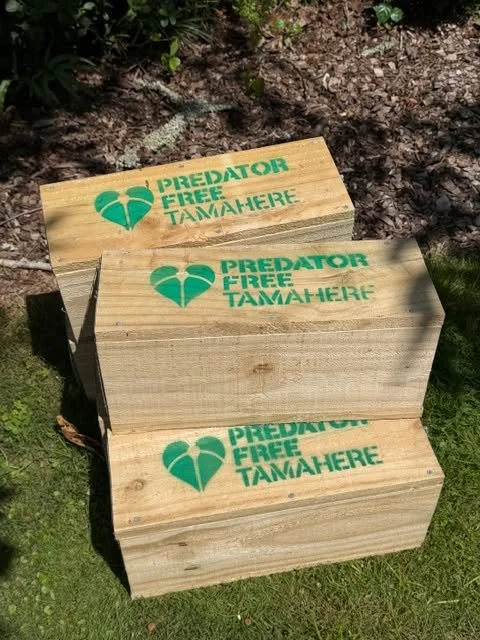
Three Predator Free Tamahere rat trap tunnels ready for new homes.
Complete with T-Rex traps, they can be purchased on our behalf from the Waikato District Council Tamahere Office.
Already trapping?
Lots of people around Tamahere are already quietly doing their bit for nature — from running traplines in their own gullies to keeping a few traps around the house.
If we don’t yet know that you’re trapping, or if your setup has changed, we’d love to hear from you. It helps us build a better picture of predator control across Tamahere and identify gaps where support may be useful.
We’re also keen to hear what you’re noticing this winter — more rats than usual, lures that are working well, or neighbours who might like help getting started.
If you’d like advice on traps, bait stations or what might work best for your property, have a look at our website resource pages or get in touch.
Every rat or mouse removed helps. Lots of small actions across many properties really do add up.
Photo credits: Predator Free Tamahere volunteers
