
What Should I Plant for Kererū?
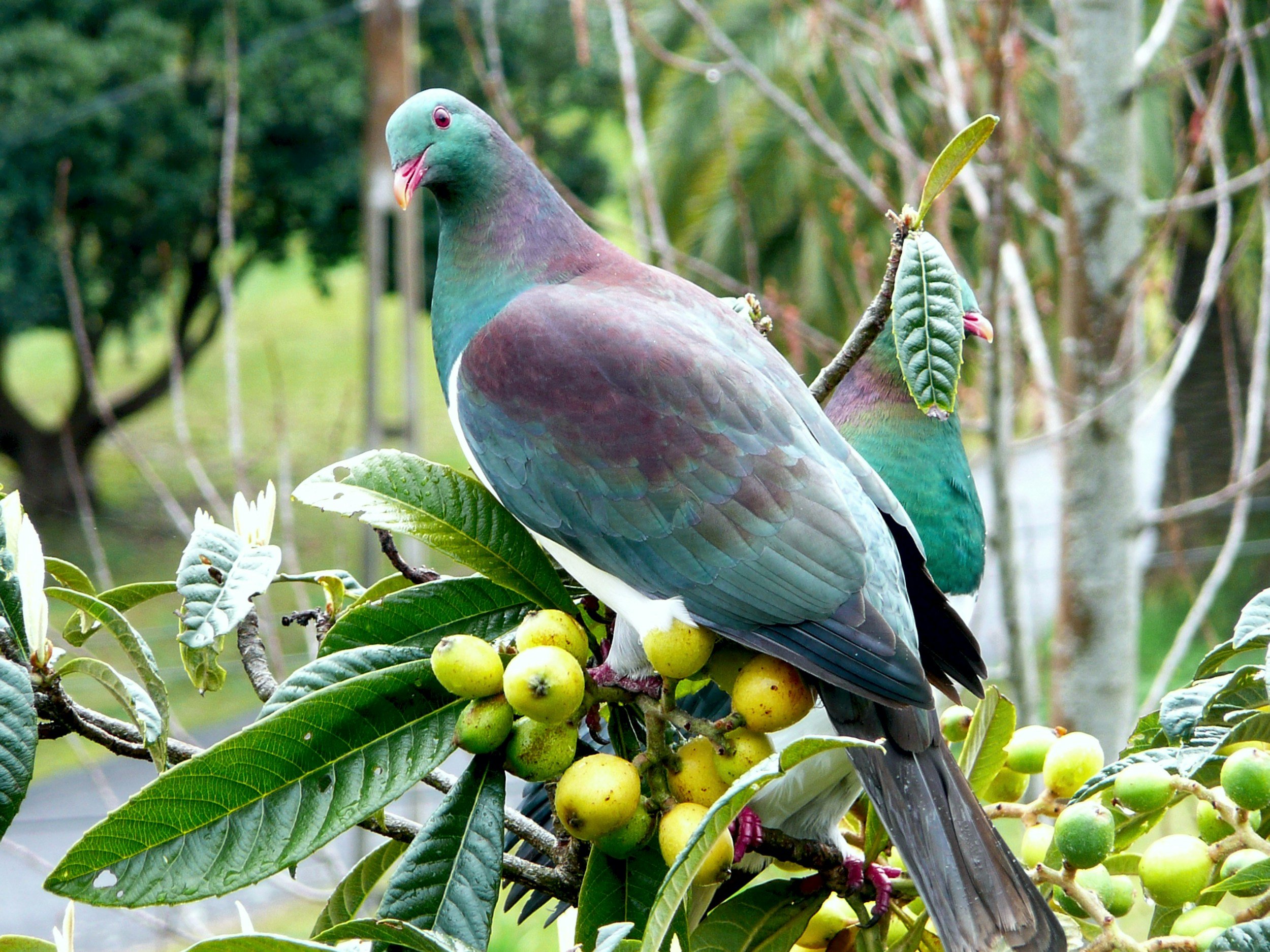
Kererū feeding on loquat fruit
A local resident recently asked us a great question:
“What should I plant if I’d like kererū to visit my garden?”
The short answer is: plant a variety of trees and shrubs that provide food at different times of year.
Kererū are one of New Zealand’s most important seed dispersers. They can swallow and spread the seeds of large native trees that few other birds can manage, helping native forest regenerate.
When we asked Landcare Research scientist John Innes, his advice was to think beyond one favourite tree. Both native and some exotic plants can help fill seasonal food gaps and make it easier for birds to move between gardens and patches of habitat.
Some good options for Tamahere
Native favourites
Kōwhai – provides seasonal flowers and foliage that kererū use, as well as nectar for tūī and korimako.
Māhoe and māpou – produce berries enjoyed by kererū and other birds.
Five-finger (whauwhaupaku) – fast-growing and useful in smaller gardens.
Tawa, pūriri, tītoki, pigeonwood, wineberry and miro – excellent longer-term food sources if you have the space.
Make the most of existing food sources
Some exotic trees and shrubs can provide useful seasonal food, especially while native plantings are still young or where native habitat is patchy.
Many Waikato birds already make good use of gardens, shelterbelts and older fruiting trees. Kererū are often seen feeding on fruit such as loquat, mulberry, plum and cherry, and large mature trees can also provide shelter and stepping stones between native habitats.
That doesn’t mean we’d recommend planting weedy species — and wild seedlings still need managing. But if you already have bird-friendly exotic trees that aren’t causing problems, they may be helping fill seasonal gaps while native trees grow.
Long term, the best approach is to plant more native food plants and help link gardens and gullies together.
Think beyond one tree
The best gardens for birds usually have:
a mix of species that fruit or flower at different times of the year
some shelter and larger trees
predator control.
Habitat and predator control really do go hand in hand.
Why it matters in Tamahere
Although local mature native vegetation is now quite limited and scattered locally, Tamahere’s gullies still provide important habitat, and we’re fortunate to have kererū, tūī and increasingly even kākā moving through the area.
Planting a few bird-friendly trees on your property may seem like a small thing, but lots of small plantings across many properties can help link our gardens and gullies together, giving native wildlife more places to feed, shelter and move through.
What are Tamahere kererū actually eating?
Since we first shared this article, locals have told us what they’re seeing kererū eat around Tamahere.
Tagasaste (tree lucerne) came up repeatedly, with kererū feeding on both flowers and foliage. That lines up with wider observations — DOC recommends tree lucerne as a useful short-term food source because it flowers prolifically in winter, has nutritious leaves and grows quickly. Locals also reported kererū eating kōwhai tips, yellow genista flowers and leaves, and even ripe holly berries.
One resident described tagasaste (tree lucerne) as a useful, fairly short-lived nurse tree in the gully, with new natives growing underneath it. Its flowers are also being used by tūī, bumblebees and overwintering monarch butterflies.
It’s a nice reminder that birds don’t necessarily read recommended planting lists. Existing gardens and established vegetation can provide useful seasonal food too — while we continue adding more native habitat for the long term.
We'd love to hear from you
Do you have kererū visiting your property? What are they feeding on? We're always interested to hear what’s happening locally and learn from what you’re seeing around Tamahere.
Header image by Ray Aucott@rayjo via Unsplash.
