
How to Use Your Flipping Timmy Trap
Thanks for helping with predator control in Tamahere. Good placement, fresh bait and regular checking make a significant difference. Here’s a simple guide to help you get the most out of your trap and make sure it’s working effectively.

A young PFT volunteer checking a successful Flipping Timmy possum trap safely mounted at a practical working height.
Where to place your trap
Choose a tree or sturdy fence post near signs of possum activity, such as:
droppings;
scratch marks;
damaged fruit or foliage;
well-used tracks or fence lines.
Possums often travel along habitat edges and established routes. If the trap has not attracted interest after several weeks, try moving it a few metres or choosing another tree.
Installing the trap safely
Attach the trap securely with screws rather than nails. Mount it around one metre above the ground so it is:
easy to check and rebait;
beyond the reach of young children;
not accessible to dogs and other animals.
Position traps away from places where pets regularly climb or investigate. Use sweet fruit-based bait rather than meat to reduce attraction to cats. Although the risk is very low, don’t assume any set trap is completely pet-safe.
Check the mounting each year and loosen the screws slightly if needed to allow for tree growth.
Baiting and setting the trap
Good bait options include:
apple dusted with cinnamon;
dried apricot;
seasonal fruit;
carrot with possum lure;
a small amount of sweet commercial possum lure.
Only bait the trap while it is unset. Never put your hand inside a set trap.
Once baited, set the trap carefully.
Watch how to bait and set a Flipping Timmy trap
Checking your trap
Check the trap at least weekly.
Each time you check:
remove any catch;
replace dried, mouldy or missing bait;
make sure the trap is securely mounted;
clear away debris that could affect the mechanism;
reset the trap if appropriate.
Keep the trap reasonably clean and working freely, but avoid using strongly scented cleaning products.
Dealing with a catch
Wear gloves when handling traps or carcasses.
Dispose of catches by:
burying them;
wrapping them and placing them in the household rubbish; or
using another suitable disposal method for your property.
Wash your hands thoroughly afterwards.
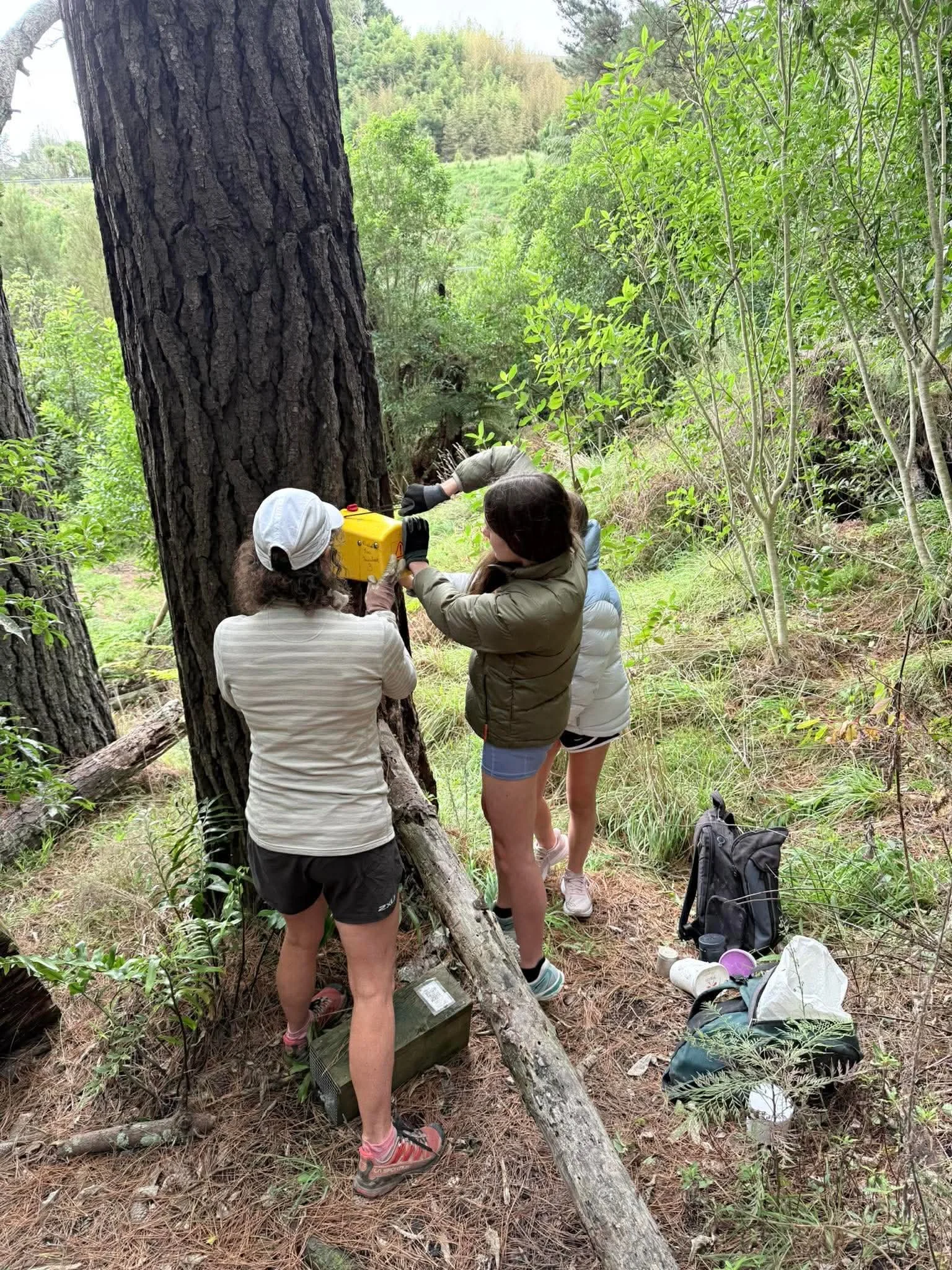
Young volunteers learning safe trap-checking: gloves on, hands clear and the trap released before rebaiting.
Not catching anything?
Possums are usually inquisitive but may take time to investigate something new.
Try:
replacing the bait with a fresh or different option;
trying another tree or fence line, even a few metres away can help;
adding a scent trail;
pre-feeding the site for several nights before setting the trap.
Pre-feeding
Before setting the trap, place small pieces of bait near the base of the tree and on the trunk below the trap. This can help possums discover the site and become comfortable feeding there.
Flour blaze
A visible, scented flour trail may help attract attention to the trap.
Mix:
500 g white flour;
100 g icing sugar;
1–2 teaspoons of cinnamon or curry powder, or a small amount of vanilla essence.
Lightly sprinkle the mixture around the base of the tree and up the trunk towards the trap. Refresh it after rain.
Adding a ramp
A ramp may help possums approach the trap confidently. Use a stable ramp at an angle of approximately 45 degrees, leaving a gap of around 30–40 cm between the top of the ramp and the trap.
Controlling bait-stealing rats
Rats may steal possum bait. A nearby rat trap can help, but place it safely in its own tunnel at least several metres from the possum trap rather than directly underneath it.
Still seeing possums but not catching them?
Some possums can be surprisingly trap-shy. See When Possums Won’t Take the Bait → for more troubleshooting ideas, or contact us if you’d like advice about other options.

Flipping Timmy possum trap with a scent trail of white flour on the tree and ramp, and a nearby rat trap to prevent bait theft and attract more pests.
Tell us you are trapping
Predator control works best when neighbouring properties are connected.
Please tell us roughly where you are trapping—even if you do not want to record every catch. This helps Predator Free Tamahere understand local coverage, identify gaps and offer support where useful.
We use property information for local predator-control planning and do not publish private addresses.
Recording catches
Trap.NZ is a free app and is the best way to record your trap and catches, but it is optional.
Recording helps us understand:
which predators are being caught;
where trapping is active;
how local results change over time.
Join the Predator Free Tamahere Trap.NZ project
Need help?
Contact us if you need advice about trap placement, bait, troubleshooting or other predator-control options.
Contact Predator Free Tamahere
Share what you’re finding
Share your catches, questions or trapping frustrations on our Facebook page. Local experiences help others learn, troubleshoot and stay motivated.
Image credits: PFT volunteers
