
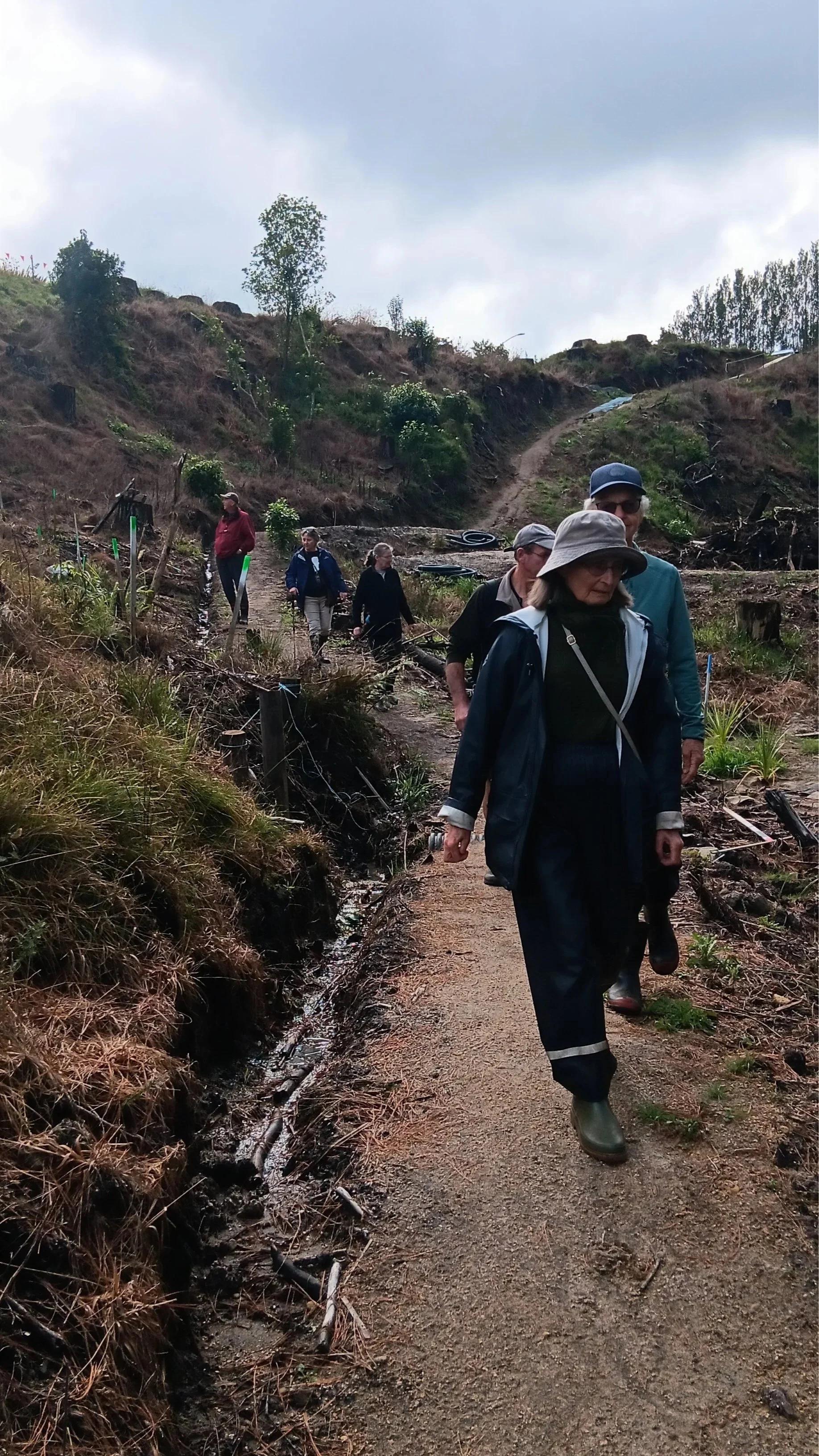
Visitors explore the Tamahere Reserve during our April gully trapline walk and talk.
In April we were delighted to host a gully trapline walk and talk in the Tamahere Reserve, with a fantastic turnout from across the Waikato.
The event brought together Predator Free Tamahere volunteers, members of newer community conservation projects, local residents curious about trapping, and people exploring what might be possible in their own neighbourhoods. It was also great to connect with Fraser Smith from Hamilton City Council's Biodiversity Team and to share experiences with others working to improve biodiversity across the region.
We walked through the Tamahere gully reserve, which is a great example of how habitat restoration and predator control work hand-in-hand. Volunteers demonstrated a range of trapping methods, from simple mouse traps through to self-resetting AT220 traps, including a live demonstration of how trap data can be monitored via the NZ Autotrap app.
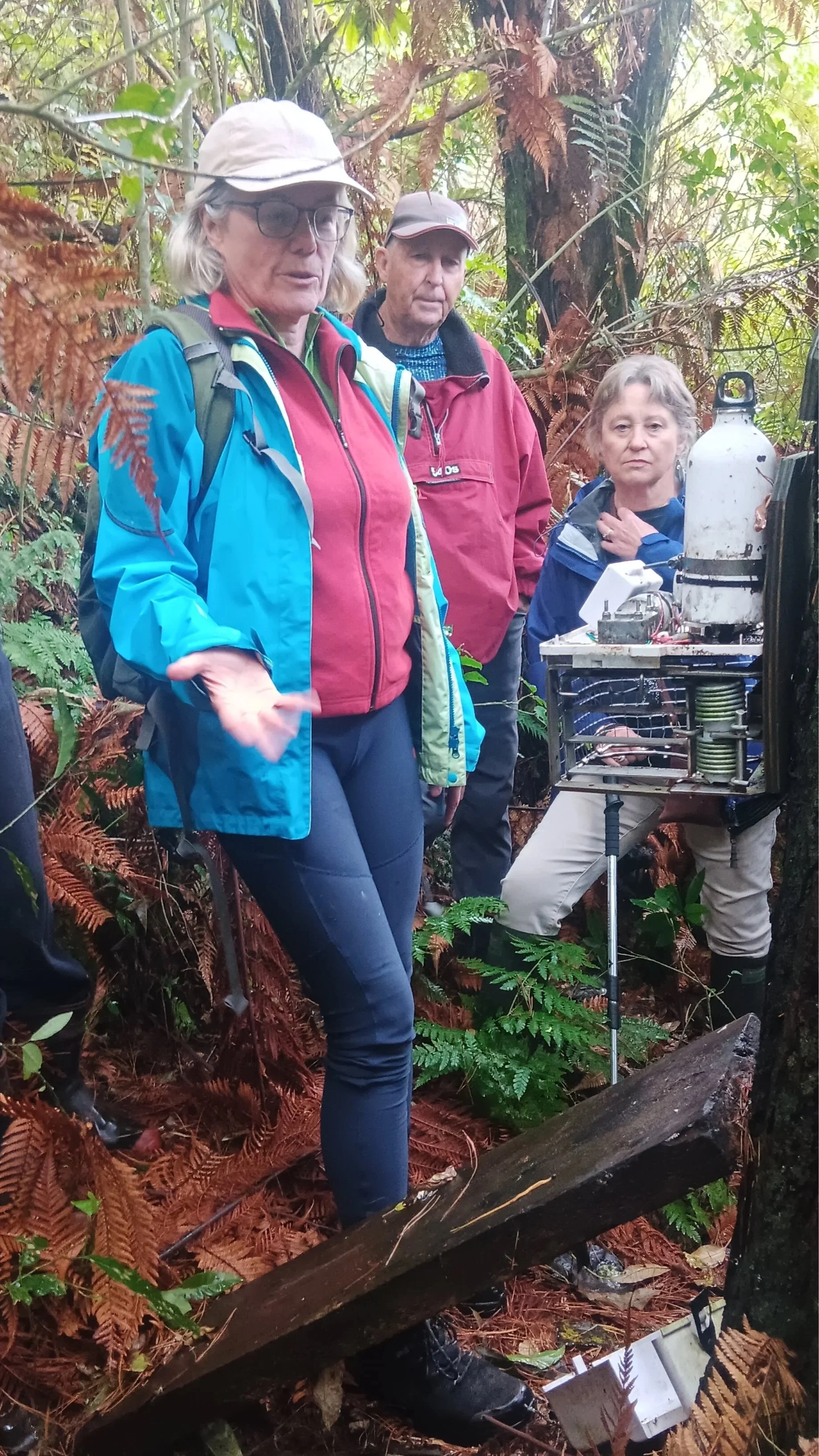
Predator Free Tamahere volunteer Jane explains the operation of an older version of the self-resetting AT220 trap
Along the way we discussed trap placement, lure choices, record-keeping, and some of the practical realities of maintaining traplines. We also stopped to visit the reserve's resident eels, which are always popular with visitors.
Events like these are a great opportunity to get out into the field, ask questions, share ideas, and see what community-led conservation looks like in practice. They also remind us how much volunteer effort is happening across the Waikato, often quietly and behind the scenes.
A huge thank you to Go Eco and Greg Townsend for supporting and helping organise the event, and to everyone who came along. We hope visitors left with a few new ideas, a better understanding of predator control, and perhaps some inspiration to get involved in conservation closer to home.
Photo credits: Greg Townsend, GoEco
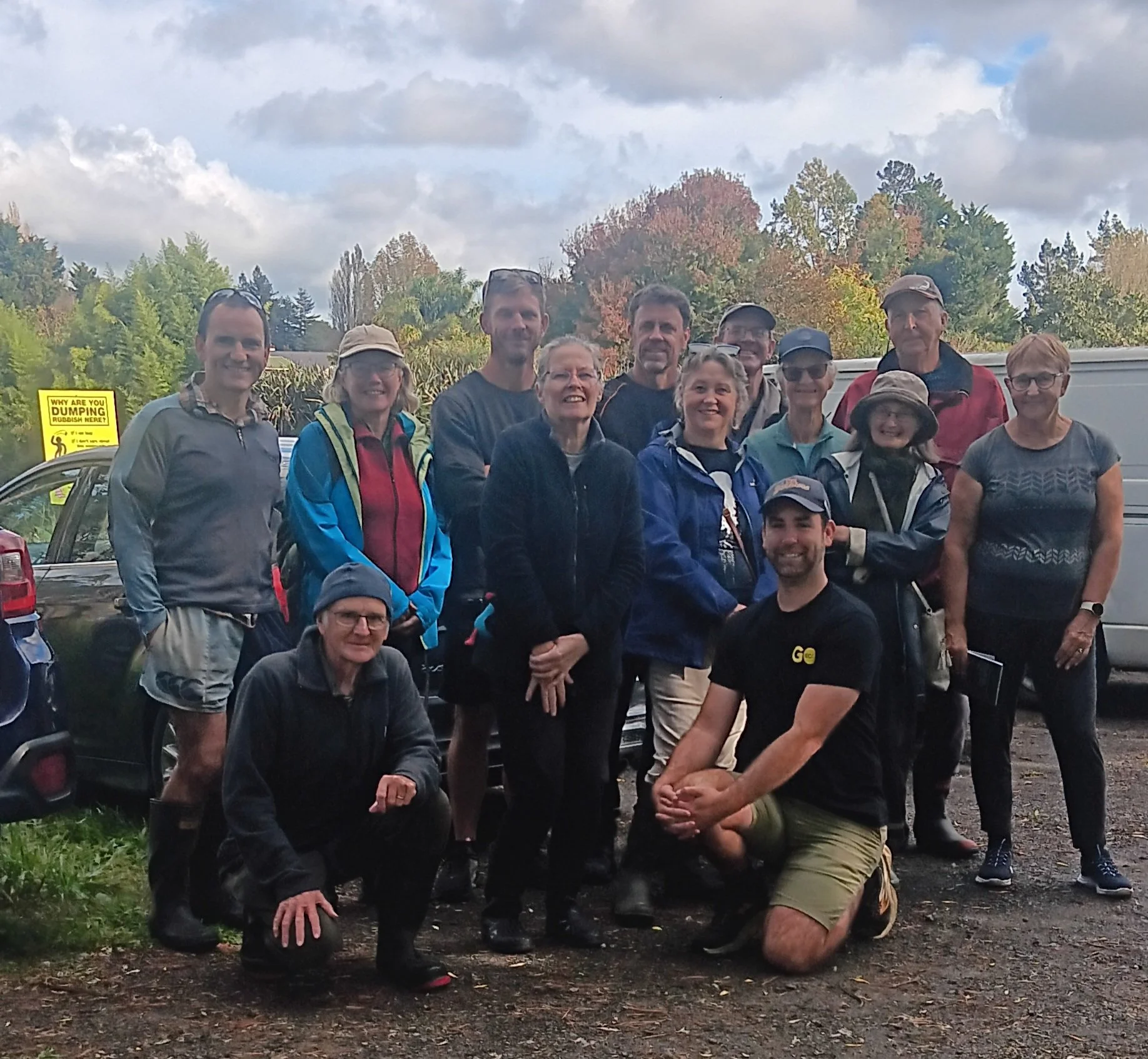
A great turnout for our April trapline walk and talk.
