
Bruce Clarkson: Rebuilding Nature in Tamahere
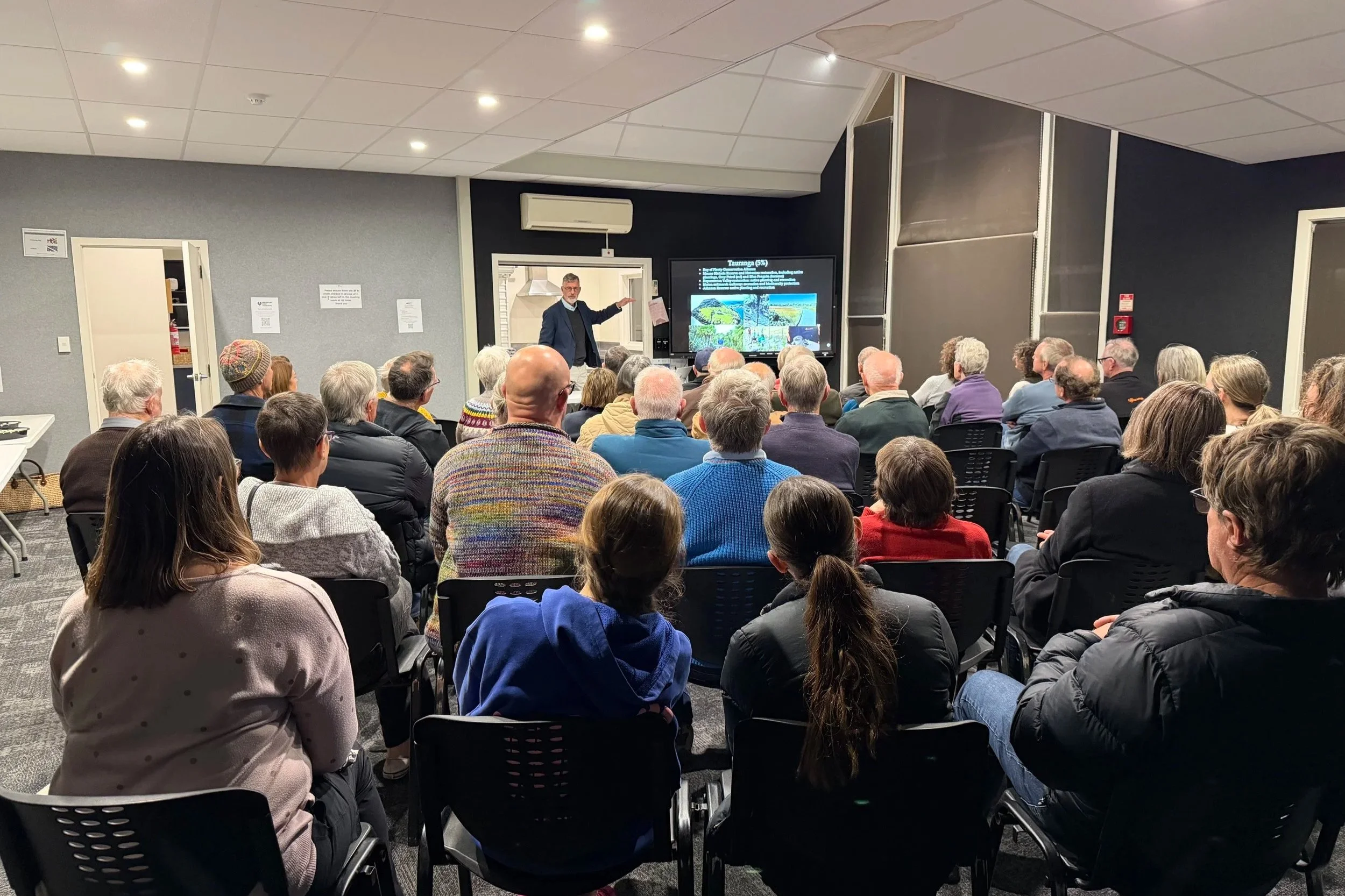
A full house for Professor Bruce Clarkson’s August talk on rebuilding native biodiversity in our urban landscapes.
Our August community evening with Professor Bruce Clarkson left us with plenty to think about — especially for anyone wondering what to plant, what to clear vs keep, and what actually makes a garden or gully valuable for biodiversity.
Bruce uses the term ecosystem reconstruction rather than simply restoration. In places like Hamilton and Tamahere, so much original native vegetation has been lost that we’re often not restoring an intact forest — we’re rebuilding missing pieces and reconnecting the forest remnants that remain.
Why natives — isn’t all green space good?
A lawn, rose garden or row of camellias is still green space. It can look lovely, cool the surroundings, absorb rain and be good for our own wellbeing.
But native vegetation does something different.
Native sedges and groundcovers, ferns, shrubs, tree ferns and canopy trees create different layers of habitat. Over time those layers provide food, shelter and living space for native insects, birds, fungi and epiphytes, while leaf litter, dead wood, shade and soil processes start working together as an ecosystem.
So planting natives isn’t simply a gardening style choice — it helps rebuild some of the ecological relationships that have disappeared from our landscape.
Bruce spoke about a goal of at least 10% indigenous vegetation cover in cities and urban areas. Hamilton currently has only around 2%, following extensive historical clearance, so protecting the remnants that remain isn’t enough. We also need to create and connect new habitat.
Start small — and work with what you already have
A few native shrubs beside an existing tree, sedges around a damp area, another kōwhai in the garden, or extending planting out from an existing gully all add something. Lots of properties doing a little can collectively help connect larger habitat areas.
One of Bruce’s strongest practical messages was not to clear useful native vegetation simply because you plan to replant a site.
Whekī and other tree ferns are a great example. They already provide shade and structure and are valuable places for epiphytes to establish as a forest develops. Bruce also pointed out the practical side — replacing a decent-sized tree fern can now cost around $120.
Sometimes the best restoration decision is simply to leave a useful plant where it is.
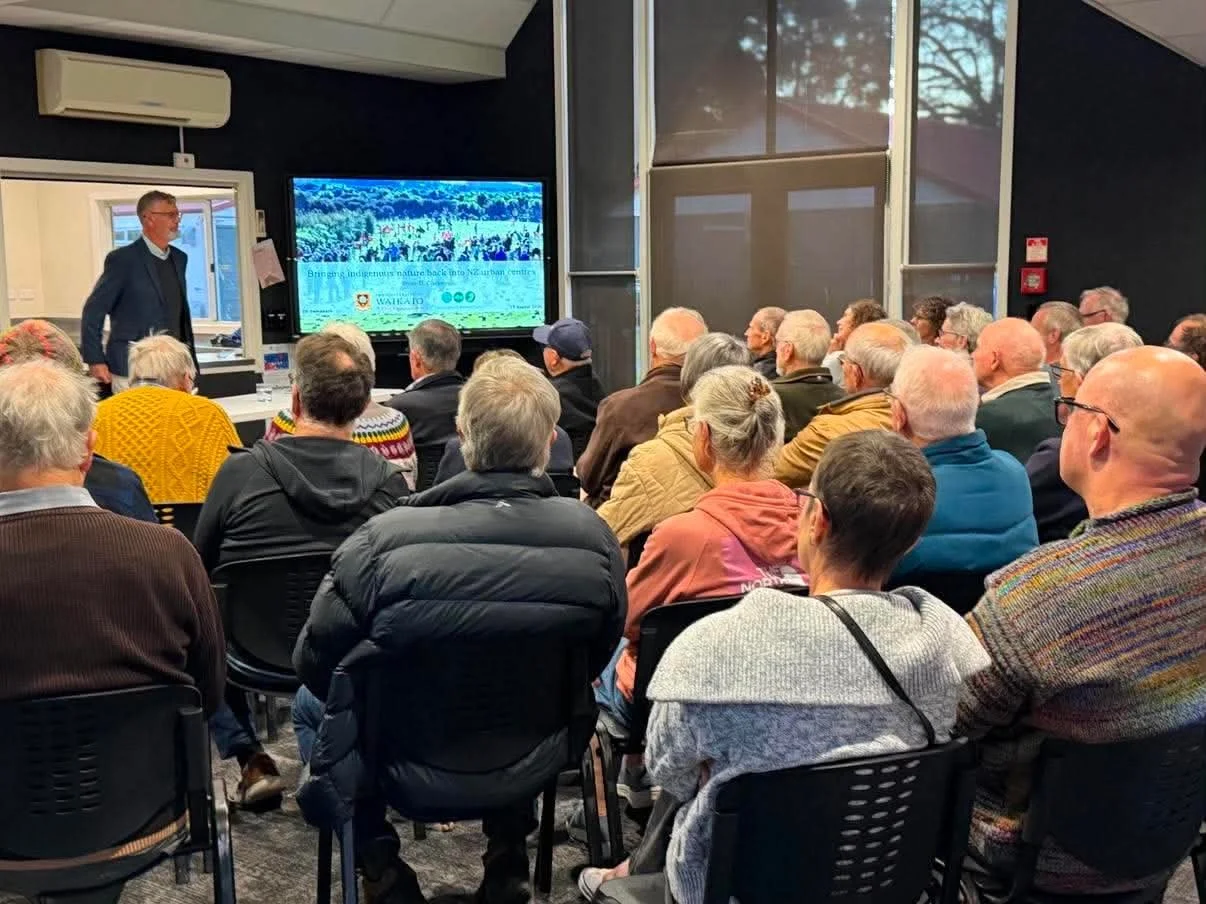
Professor Bruce Clarkson answering questions and sharing lessons from decades of research into native ecosystem reconstruction.
Think in decades, not planting seasons
Bruce described around 14 years as the point when a native planted area can begin regenerating beneath its own canopy, with 20 years and beyond bringing more of the structure and processes we associate with a functioning native forest.
The trees we plant are really just the starting framework.
That led to a great question from the audience: what happens around year 15, once the initial planting has grown up? What should we be doing?
Bruce talked about enrichment planting and deliberately adding species and other components that may not simply return on their own. There is plenty of advice about clearing weeds and getting plants in the ground, but less about what comes next once the canopy gets established.
His updated gully restoration guide is due out soon and should be particularly useful for Tamahere landowners whose plantings are now reaching that stage.
Habitat and predator control go together
Healthy native ecosystems do far more than give birds somewhere to live. They help manage stormwater and flooding, cycle nutrients, store carbon, cool our surroundings, improve resilience to climate change and contribute to our own health and wellbeing.
And for wildlife, the message is simple: habitat and predator control need to work together. Providing food and shelter without controlling predators leaves birds and other wildlife vulnerable; trapping without enough habitat gives them little reason to stay.
For Tamahere, perhaps the most useful takeaway is this: protect what is already working, add what is missing, connect the remnants, and give it time.
Bruce encouraged everyone to visit Waiwhakareke Natural Heritage Park to see ecosystem reconstruction in action as it matures.
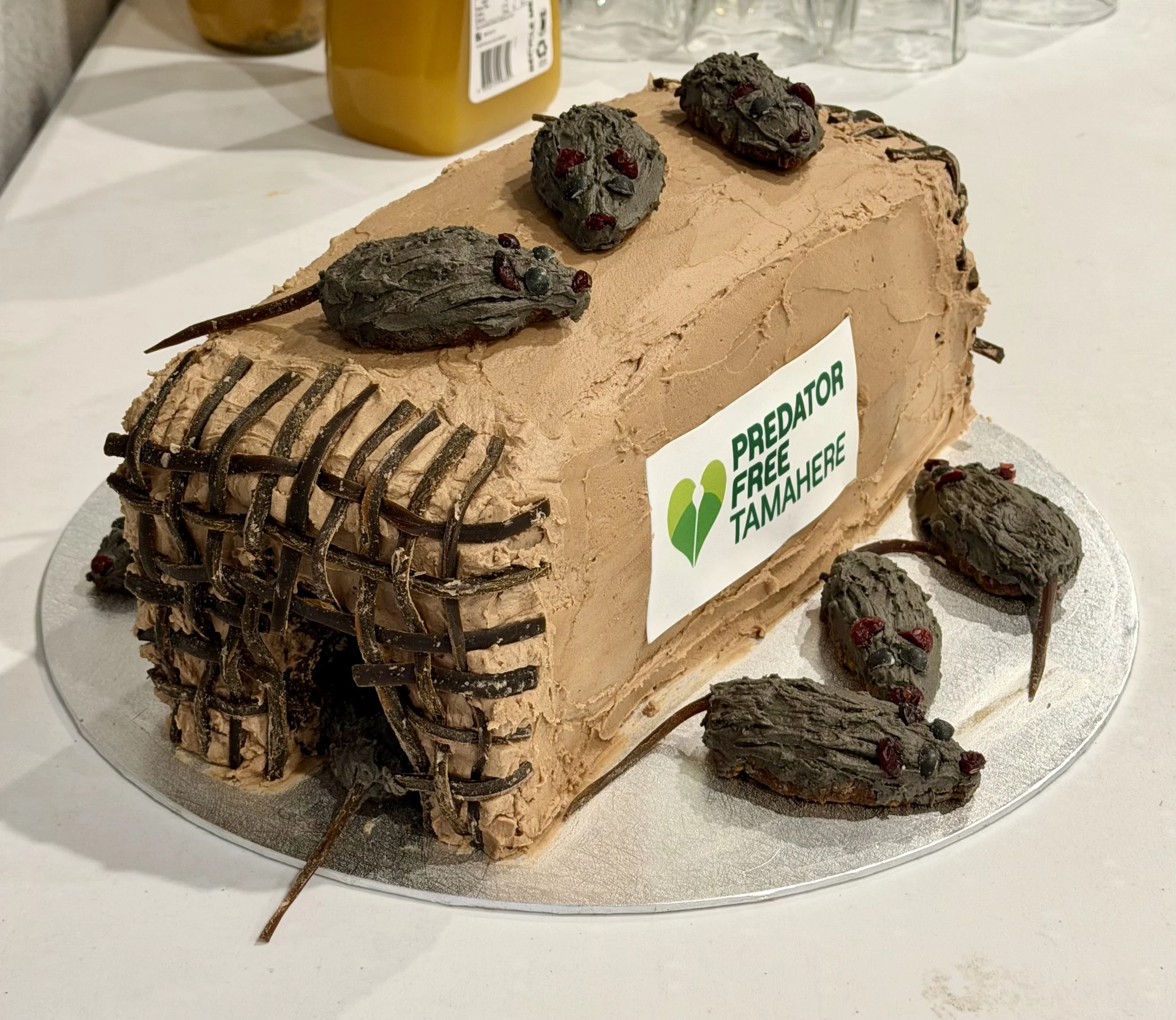
No PFT gathering is quite complete without one of Robyn’s cake creations — this rat-trap-tunnel cake also marked our recent Mayoral Award and passing our recent milestone of 14,000 pests removed.
Our evening brought together a lot of local gully enthusiasts along with visitors from neighbouring conservation projects. Most stayed well after the talk for food, cake and conversation — swapping ideas about gullies, trapping and what’s happening in their own neighbourhoods, inspired by a great talk.
A big thank you to Bruce for sharing his extensive knowledge so generously.
So, where to start? If you’re new to native planting, look at the conditions you have — wet or dry, sunny or shady, open garden or gully — and choose plants to suit. If your native planting is already 10 or 15 years old, look under the canopy and ask: what’s missing, and what could we add next?
