
Gully Restoration & Walkways
A local highlight of the past year has been the ongoing work of the Tamahere Mangaone Restoration Trust — a dedicated, volunteer-led group transforming our local gullies.
For more than a decade, the Trust has been restoring sections of the Mangaharakeke and Mangaone gully networks, beginning with Tamahere Reserve and expanding into extensive stream-side planting, weed control and habitat restoration. Thousands of native plants are now established where there was once overgrown scrub and dumped rubbish.
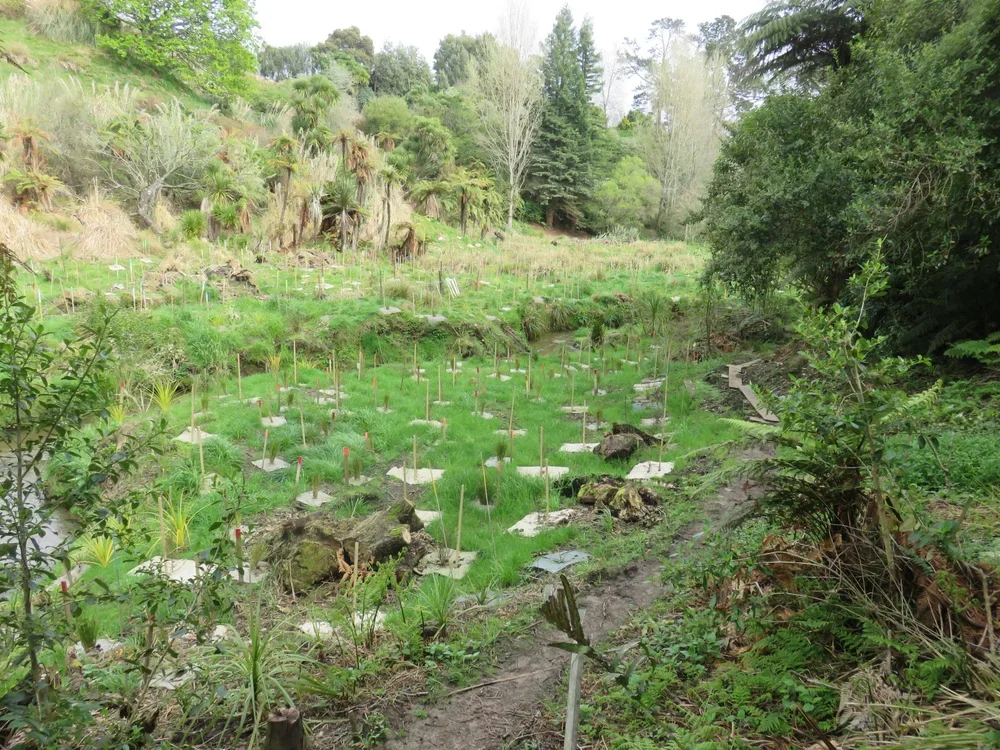
TMRT: Mangaharakeke gully planting
A major milestone this year has been improved public access into the Mangaharakeke gully from Bilsthorpe Lane, off Matangi Road. After several years of planting and careful site preparation — supported by Waikato District Council — locals can now walk through parts of the gully and see the restoration taking shape. While further track and boardwalk upgrades are still to come, this access already makes a noticeable difference.
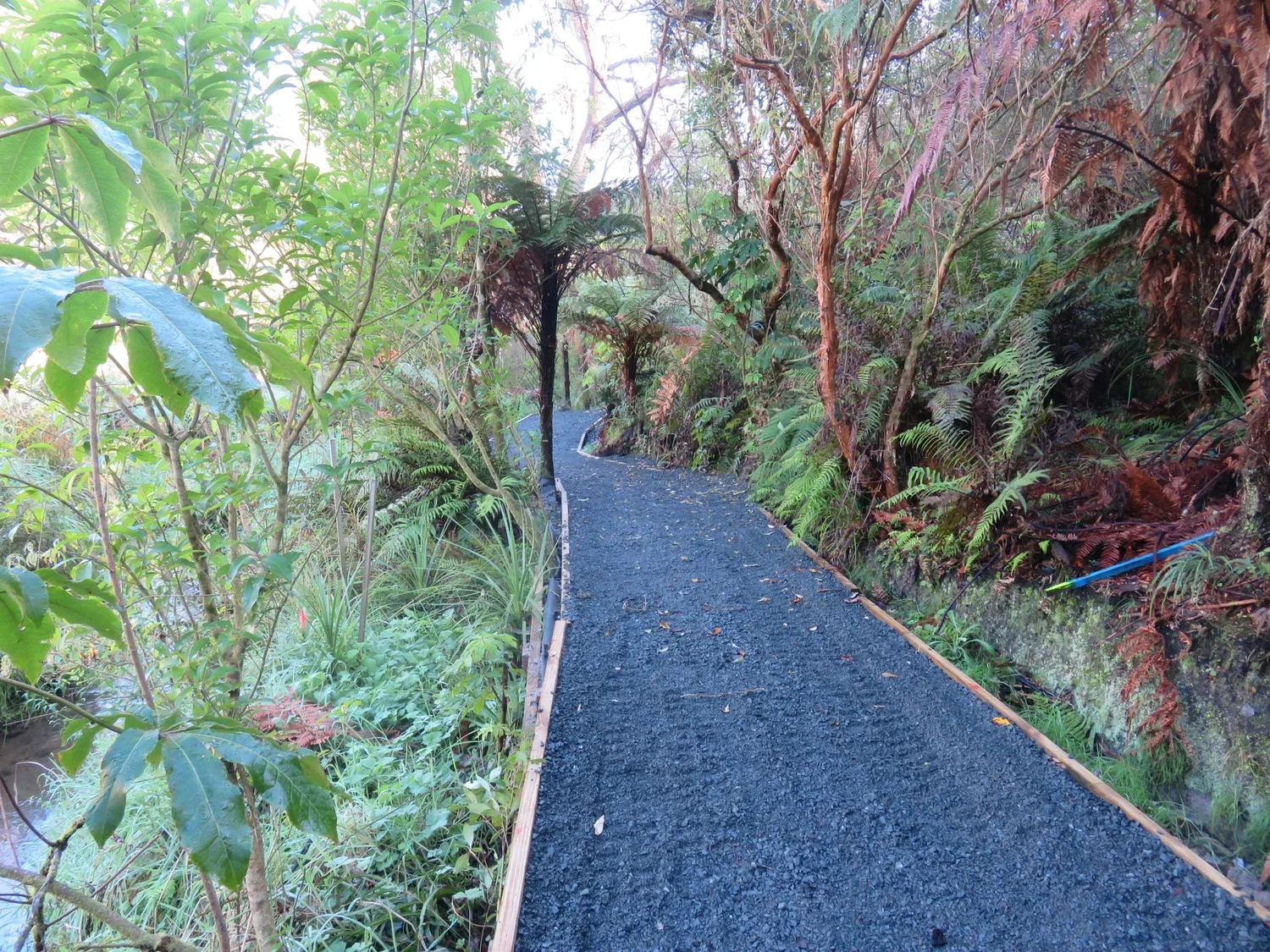
TMRT: new gully track
It’s worth clarifying that while the Waikato District Council targeted rate, introduced two years ago, has been instrumental in supporting this restoration and walkway work, 100% of that funding goes directly to the Tamahere Mangaone Restoration Trust. Predator Free Tamahere does not receive any of this rate funding. Our trapping work alongside these restored areas is funded separately, through grants, partnerships and community fundraising.
From a predator-control perspective, the improved gully access is a real boost. Established plantings and clearer pathways mean we can now place traps more strategically and safely throughout the gully system, including in and around new plantings and existing bush. This is already improving our ability to protect these restored areas from rats, possums, stoats and other predators.
What’s particularly encouraging is how well these community efforts align — the Restoration Trust’s planting and track work and Predator Free Tamahere’s trapping all reinforcing each other. Healthy habitat combined with effective predator control gives native wildlife the best chance to return and thrive.
If you haven’t already, we highly recommend visiting the Mangaharakeke gully entrance off Bilsthorpe Lane to see the restoration work up close and appreciate the scale of what’s been achieved.
